How much of a favourite song do you actually need to hear? Sometimes a single chord will do it. The funny thing is that you may recognise the record without being able to say what instrument you're hearing. You notice its absence if someone leaves it out.
The browser is a distracting place to do this. Your lyric video may be parked beside a film trailer, a chat window or a search for demo slot gratis. Pause the other audio for a minute and go back to the start. A good song opening gives you a reason that still holds up when the whole track plays.
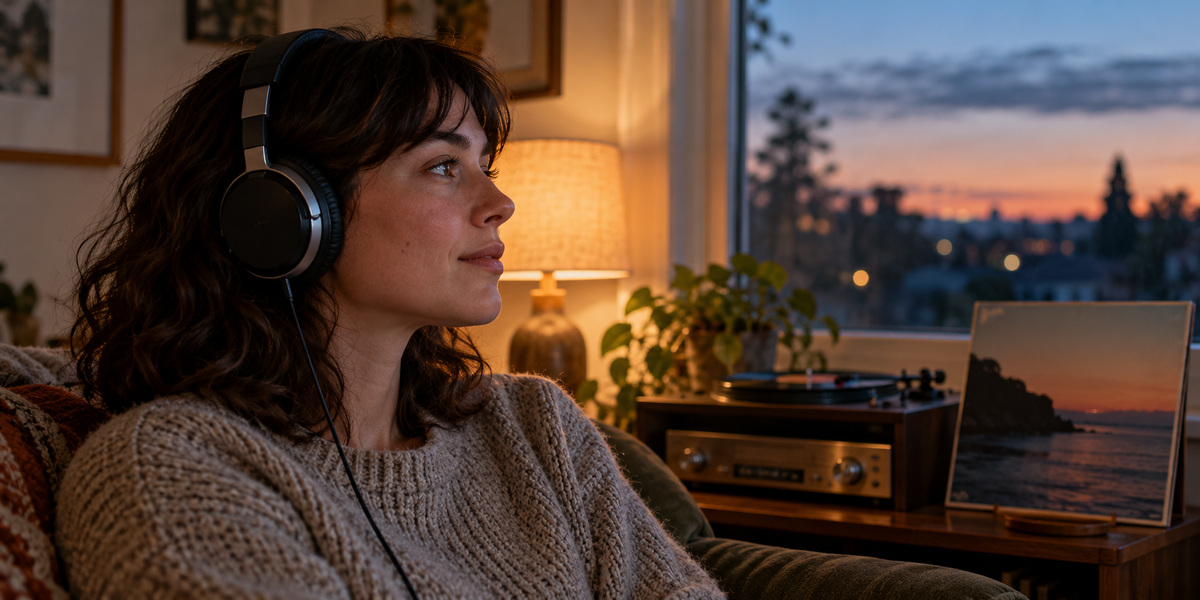
eLyrics original editorial image of a fictional listener caught by the opening of a song.
What a Song Intro Can Tell You
The first instrument has a setting of its own: perhaps a cramped, boxy sound, perhaps a huge echo. Does it sound close enough to touch, or as though it's coming from the far end of a hall? A few seconds later, the singer will have to enter that space. You already have a setting before you have a story.
A Single Sound Can Be Enough
The Beatles' "A Hard Day's Night" is a handy place to start. There is that chord, and then John Lennon is singing. Hardly any waiting around. People can argue over the notes in the chord; you can hear its effect without joining the argument. Try starting the track at the first vocal instead. Something's missing, isn't it?
Rhythm Gives the Voice Somewhere to Land
Try tapping four steady beats on the arm of a chair. Keep them going when the singing starts. Has the first word arrived where you expected it? You might have to fight the urge to move your hand to follow the voice. The drummer and the singer don't have to mark time in quite the same way. Hear it once and you may start noticing it in other records.
The First Lyric Changes the Picture
The first lyric puts a person in the picture. Who is speaking? A singer might begin with a name, a place or just an unexplained "you". Suddenly there is a person to work out, although it is too early to assume that person is the artist. This is where lyrics change what we hear in a song. What sounded welcoming a moment ago might now feel like an invitation we ought to be suspicious of.
Listen for Contrast
In "A Hard Day's Night", the lyric moves from a tiring working day to the comfort of coming home. That makes the briskness of the record interesting: exhaustion is in the story, but the performance hardly drags. You could hear that as relief arriving early. It is a reading to try, rather than a claim about what Lennon intended. The point is to put the sound and the words together, then see what you make of them.
| Opening detail | Something to listen for next |
|---|---|
| A lone voice | What changes when the instruments enter? |
| A repeated guitar figure | Does it continue beneath the verse? |
| A steady drum pattern | Where does the singer place the first phrase? |
| A slow swell or sudden silence | Does the next section fulfil the expectation? |
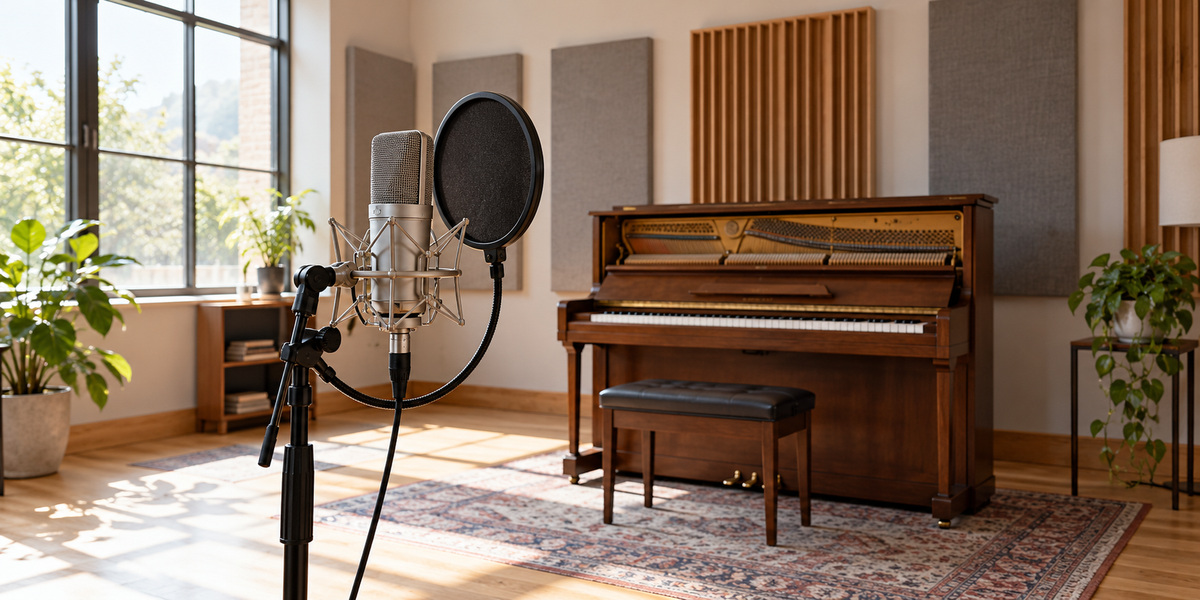
eLyrics original studio image: a microphone is ready for the first vocal line.
The Recording Makes Its Own Choices
With a cover, you might still be waiting for the old piano introduction when the new singer starts. Hang on, have they missed a bit? Even when the words survive intact, the lead-in may be completely different. The U.S. Copyright Office distinguishes a musical work from a sound recording: the music and lyrics are one work, a particular recorded performance another. It is worth keeping the difference in mind when two people agree they love a song, then argue about which recording to put on.
And listen to the moment the intro ends. You may hear less, rather than more: a drum drops out to make room for a breath, or a sustained note is cut short. For some production examples, try our piece on sound effects and transitions in electronic music. Then return to your track and see whether you can hear the join. Is it obvious? Does it need to be?
Give the Opening a Second Listen
Use two recordings of one song for a small comparison. An album take and an acoustic performance will do, if you have both. At a comfortable volume, work through the openings:
- Which instrument, voice or noise gets there first?
- Check for the opening phrase under the verse or chorus.
- Listen once without the words in front of you, then once with them.
- Try the other recording and note what has been left out.
On the second listen, there is less guessing to do. You've heard the whole story, and the opening may strike you differently because of it. Or you may find yourself waiting for that lovely guitar part again, without wanting to analyse anything. Either way, the first few seconds have earned their place on the record.