You can turn on almost any playlist and hear at least one song about luck in no time. Writers have been using phrases about chance for decades, and it works because everybody understands what they mean. An expression like "rolling the dice" needs no explanation.
So why does this image last, and how do four very different songs use it?

Sheet music, picks and a guitar neck. Photo: Unsplash
Why the language of luck never gets old
A risk is a story in miniature. Something can be lost, tension builds, and there is a result. A song is roughly three minutes long, which means it cannot afford slow storytelling. Saying that someone played cards means that listeners will draw conclusions on their own.
Many clichés help the listener understand the meaning. The narrator with a good hand shows confidence. The bluffer is someone who has something to hide. The one who leaves the table has learned a hard lesson. We see that immediately, which is why writers use this setup so often.
Four songs, four ways to take a chance
Pleading with luck: "Luck Be a Lady"
Frank Loesser wrote this song in 1950 for the Broadway musical Guys and Dolls, which opened on November 24 of that year. As Songfacts says, Robert Alda was the first to sing it, in the role of Sky Masterson. What is interesting about the song is that the singer personifies luck; he compliments it, scolds it, and asks it to behave. Marlon Brando sang it in the 1955 film, and that version later ranked number 42 on the AFI list of the best songs in American film.
Living on the edge: "Ace of Spades"
Motörhead released the song as a single in October 1980, and its authors are Eddie Clarke, Lemmy, and Phil Taylor. The song rose to 15th place in the UK charts. It is fast, loud and short, with no safety net. Many fans regard it as the band's anthem, though Lemmy himself said in 2000 that he didn't see it that way.

A guitarist under the stage lights. Photo: Unsplash
The city as a place to try your luck: "Viva Las Vegas"
The tune was composed by Doc Pomus and Mort Shuman for the 1964 film starring Elvis Presley. Elvis recorded it in July 1963, and the single was released on April 28, 1964. The risk in the song is not a threat or a plea but a joyful celebration, with the city itself as the stage.
A chance that may not come twice: "Lose Yourself"
Eminem's 2002 song from the film 8 Mile is about a single moment that a person has to seize. It was released on October 28, 2002 as the lead single from the soundtrack. Eminem has said he wrote it on set during breaks in filming. It became the first hip-hop song to win the Academy Award for Best Original Song.
The four songs at a glance
In reality, the same image stays interesting and attractive across various songs: for one writer it means charm, for another rebellion, and for another plain ambition.
How to read a lyric about risk
The pattern is simple to detect once you learn it. Some questions usually help open up a song like this one:
- What is at stake: money, pride, a relationship or a future?
- Who is the other player: luck, a lover, or the world?
- Is the narrator winning, bluffing or leaving the game?
- What do the cards or dice mean?
After answering these questions, any catchy line becomes a story of its own. For more on how words shape what we hear, see how lyrics change what we hear in a song, and for the opposite case, what love songs leave unsaid.
From the card table to the phone screen
The smoky card room of older songs has largely moved onto phone screens. Readers curious about how modern online play handles payments can browse a guide to ezeewallet casinos Australia. This is strictly for adults, and the rules differ from country to country. Services of this kind are restricted in some places, Australia included, so check your local law first.
Why the image keeps coming back
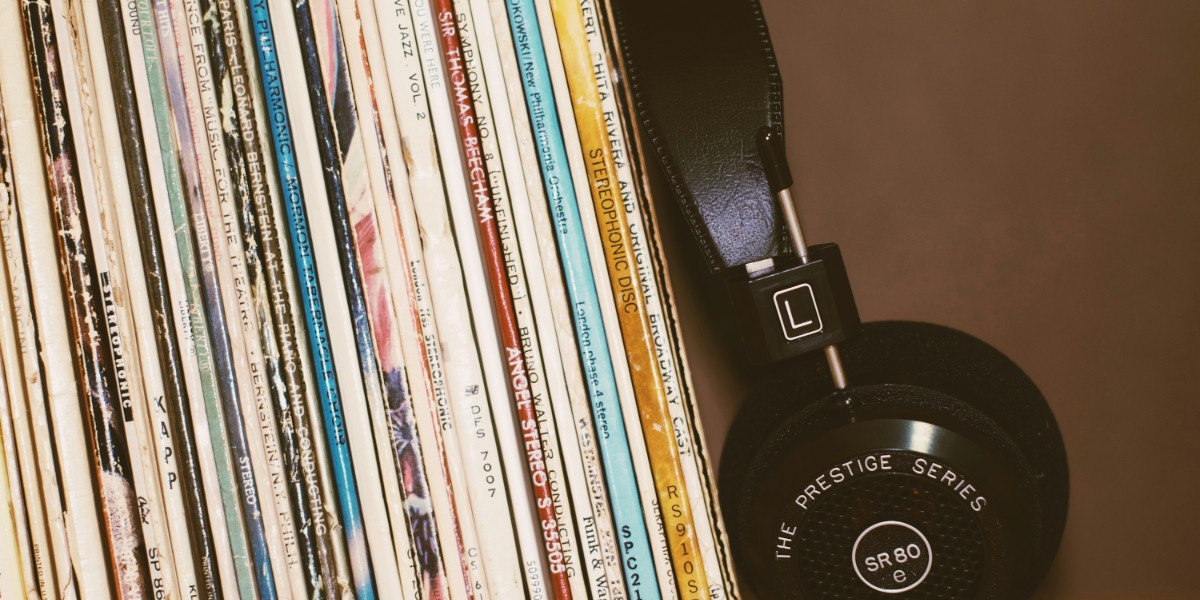
Old records and a pair of headphones. Photo: Unsplash
This image works well in songwriting because it gives answers to very important questions. Risk, hope, deception and consequences fit into a picture that everyone can see. The settings change from card tables to stages to phones, but the feeling remains the same. The more people take risks, the more songs will be written about it.