You have experienced it, even if you don’t realize what is behind it. You lie down on the table for the massage, the therapist reduces the lighting, and in the distance, a soothing soundscape starts playing. After only several minutes – before a single knot is massaged – your shoulders drop, your breathing slows, and your body starts relaxing. This is no coincidence – it is called audio psychology, and a carefully selected playlist is one of the most undervalued tools of a therapist.
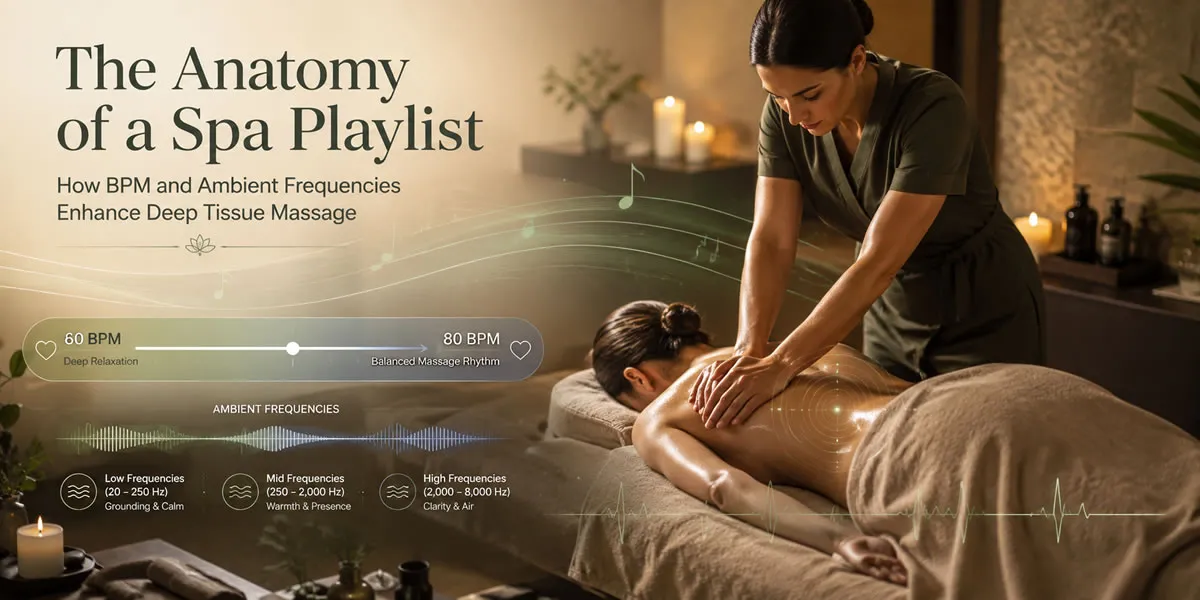
Below that misty, ambient soundscape is an array of scientific principles at work. The tempo, the frequencies used, and even the instruments themselves have physical effects on the nervous system. By choosing the correct music for a massage therapy session, you aren’t simply creating a mood—you’re literally conditioning the body to be ready to relax. Here’s how the science behind that playlist works.
Tempo: The Heartbeat of Relaxation
By far, the single most significant element of a spa playlist is the tempo of the music, which refers to how fast it is in beats per minute (BPM). Research on the relationship between tempo and physiological reactions is very straightforward – slower music will calm people down while faster music will agitate them. This is exactly why instrumental covers of modern, atmospheric tracks like Billie Eilish’s ocean eyes feel so deeply sedative—their natural tempo already sits at that perfect, slow-burn rhythm.
Sports scientists usually classify tempo in three categories: slow (approximately 60–108 BPM), moderate (108–120 BPM), and fast (120–168 BPM). Fast-tempo music is deliberately used in pre-game warmups because of its ability to increase heart rate and arousal level, but this is exactly what spas are trying to avoid with their playlists.
It is evident from the physiological standpoint as well. One particular experiment was performed on people who listened to slow music (50–60 beats per minute) and fast music (120-130 beats per minute). It has been discovered that slow tempo resulted in a statistically significant reduction in systolic and diastolic blood pressure, whereas fast tempo elevated them. Low blood pressure and a calm cardiovascular system are exactly what a deep tissue therapist needs when trying to massage the tight muscles.
The person whose body is physiologically tense will not allow deep work to be performed on him/her, but a relaxed body allows it. The best choice for the massage playlist is music at 60 BPM, as this rate is very close to the heart rate of a relaxed human being.
The Parasympathetic Switch
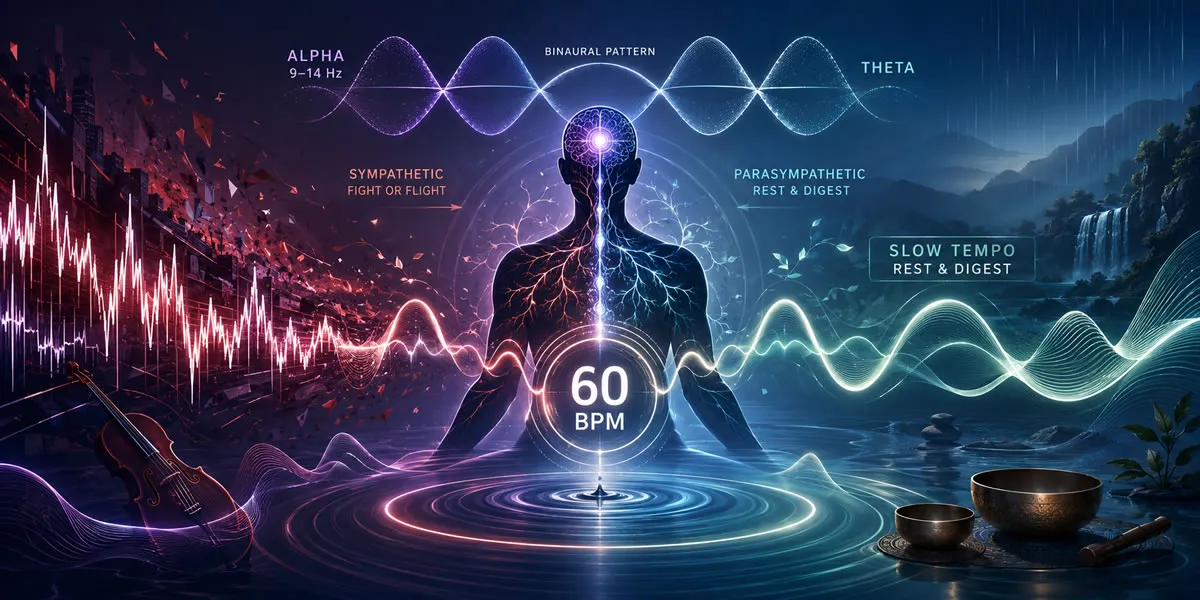
Tempo not only alters your heart rate but turns on a different setting for your autonomic nervous system. The body operates on two conflicting settings – sympathetic (“fight or flight”) and parasympathetic (“rest and digest”). For deep tissue massage to be effective, the latter setting must be active since it’s when muscles relax, and no defense mechanisms take place.
In fact, slow and soothing music contributes to that process of shifting between the two states. Scientific studies on the effect of music-induced relaxation have proven that it promotes parasympathetic nervous activity and inhibits sympathetic nervous activity, the required autonomic nervous system adjustment to prepare muscle tissues for relaxation. It’s the same biological reason why stripping down a massive, emotional pop ballad, like an acoustic piano rendition of Adele’s Someone Like You, suddenly transforms it into a powerful relaxation tool. As a result, an appropriate music selection completes half of the massage treatment before the actual deep tissue manipulation happens, since it helps your body relax the nervous system for the work ahead.
It becomes crucial in the case of deep tissue massage in particular, since deep and prolonged pressure into stiff muscles can become threatening for an activated nervous system and cause your body to brace against it. But under the influence of the parasympathetic system, the same pressure causes relaxation.
Binaural Beats: Tuning the Brain
This is where things become truly futuristic. One of the more advanced spa and therapy soundscapes incorporates binaural beats, which occur when slightly different frequencies are played in each ear, creating the illusion of an additional phantom tone. Give one ear 440 Hz and the other ear 425 Hz, and your brain will pick up on a phantom tone of 15 Hz. It becomes easier for your brainwaves to entrain, or adjust to, this particular frequency.
As far as relaxation techniques go, the important frequencies are those in the low ranges. Studies have shown that when people listen to binaural beat music in the alpha range of roughly 9-14 Hz, they tend to enter their brain’s normal resting state, which can release endorphins and create emotional stability while reducing stress and anxiety. Even more applicable to massage is the fact that a study done using a double-blind technique has shown that listening to theta-frequency binaural beats during the post-exercise relaxation process increases parasympathetic activation and sympathetic withdrawal, the same thing that causes muscles to relax.
Other work has linked alpha-frequency binaural beats to reduced sympathetic activity and increased parasympathetic activity measured through heart rate variability. The research isn’t perfectly unanimous — some studies find weaker effects than others — but the overall direction is promising enough that high-end wellness spaces increasingly layer these frequencies quietly beneath the audible music, nudging the brain toward a calmer state.
The Low-Frequency Foundation
Pay attention to an excellent spa soundtrack, and you will see that it is created with the help of low-frequency sounds – drones, bass pads, singing bowls, and the rich sound of a cello. Low-frequency sound is not just heard but also physically perceived – these long sound waves penetrate one’s body and make one feel grounded and heavy.
The choice of instruments is also important in this case. An ideal relaxing soundtrack does not include any sharp, percussive, or high-pitched sounds that may startle your nervous system. Think of the warm, lingering acoustic guitar notes in Coldplay’s Yellow, but stretched out and layered with drone sounds. Instead of aggressive hits, it includes only smooth and sustained sounds with a long attack and decay – sound waves that grow and gradually disappear. One can mention ambient synth pads, soft piano, and natural sounds such as rain or water in the distance here.
This principle even extends beyond conventional therapeutic massage. In more sensual or intimate modalities, the kind offered by a specialist erotic massage london practitioner, the soundscape does similar physiological work, using slow tempos and warm low frequencies to melt tension and deepen presence. The underlying audio psychology is the same whatever the style of massage: sound that slows the body opens the body.
Building the Perfect Session
Put all of the elements together, and it becomes evident what makes up the anatomy of an effective spa playlist: It is slow-paced – about 60 BPM to lower heart rate and blood pressure. It utilizes smooth, prolonged, low-frequency instruments in order not to shock the nervous system. Sometimes it uses low-range binaural beats to encourage the brainwaves into an alpha or theta state. The music does not contain any shocks: there are no sharp crescendos and abrupt key changes. Instead of the dramatic drops you’d find in club hits, the playlist mirrors the gentle, airy swells found in atmospheric pop songs like Taylor Swift’s Epiphany.
In this way, the process of relaxation becomes possible due to the combination of the effects of music and the hands of a specialist. As soon as the massage begins, the body has already been prepared for the procedure by the effects of the music, and the parasympathetic state has been achieved.
Thus, when you find yourself relaxed on the table before the massage begins, you can be sure that there was no magic involved, but just the tempo, frequency, and instrumentation of the music.