Anyone who has walked out of a gig with ringing ears knows the feeling: a high-pitched hum that lingers through the drive home and sometimes into the next morning. It's so common that most music fans shrug it off as part of a good night. But that ringing is your ears telling you something, and a little understanding of decibels makes it much easier to keep loving live music for decades, not years.

eLyrics original editorial image of a music fan wearing hearing protection; the scene represents a typical gig rather than a specific performance.
A quick decibel primer: loudness and exposure
Sound is measured in decibels (dB), and the scale is logarithmic — which is the part that surprises people. An increase of about 10 dB often sounds roughly twice as loud and represents ten times the sound intensity. So the jump from a busy restaurant to a rock concert isn't just a little louder; it's much more intense. Risk guidance uses A-weighted decibels (dBA), adjusted for human hearing.
Approximate reference points vary by equipment and distance:
- 60–70 dBA — normal conversation.
- 85 dBA — heavy traffic; repeated or prolonged exposure can pose a hearing risk.
- 100 dBA — a loud club or high-volume headphone listening.
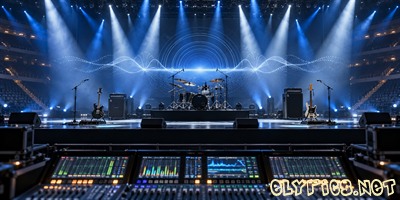
- 94–110 dBA — a typical range for concerts; levels vary across the venue.
Why "how long" matters as much as "how loud"
Hearing damage depends on both level and time. NIOSH recommends an occupational exposure limit of 85 dBA averaged over eight hours, with exposure time halved for every 3 dB increase. At 100 dBA, that corresponds to around fifteen minutes. These are workplace limits, not a guarantee of risk-free listening. A two-hour show averaging 105 dBA is far beyond that recommended exposure and can cause ringing or muffled hearing.
Lasting damage can accumulate: the tiny sensory hair cells in the inner ear don't grow back when destroyed. As the NIDCD's guidance on noise-induced hearing loss explains, hearing can seem to recover while some damage remains. Ringing that fades overnight is a warning; no ringing doesn't prove that the exposure was harmless.
Headphones are the everyday version of the concert
Most of us aren't at gigs every night, but we are wearing headphones for hours. On a noisy commute, turning earbuds up can produce potentially harmful levels. The familiar 60/60 rule — no more than 60% volume for sixty minutes before a break — is a reminder, not a safety guarantee: output varies by device and headphones. Well-fitting, noise-cancelling headphones can reduce the temptation to turn up the music. Use exposure monitoring where available.
Measure it instead of guessing
The useful thing is that you no longer need specialist equipment for an initial check. Your phone's microphone can provide an estimate of the room around you, and a decibel meter online runs straight in the browser — no app to install, though microphone permission is needed. It can help you compare the bar, rehearsal room or club with quieter surroundings.
Phone-based readings vary with the microphone, software and calibration; loud sound may be underestimated. Treat them as a guide, not proof of safety. If you must raise your voice at arm's length, reduce exposure. Room readings don't measure sound inside headphones.
Protecting your ears without killing the vibe
Make protection a habit before the first song:
- Wear musicians' earplugs at gigs. High-fidelity plugs reduce frequencies more evenly, helping music retain its character. Correct fit matters.
- Stand back from the speakers. Moving away can reduce exposure, though room acoustics affect the difference.
- Take quiet breaks. Step into a quieter area between sets to reduce your total exposure; breaks don't undo damage.
- Watch your headphone volume, especially on noisy transport where you're tempted to crank it.
The takeaway
Loving music for a lifetime depends on protecting the ears you hear it with. Knowing roughly how loud your surroundings are — and how long you're spending there — turns hearing protection from guesswork into an easy habit. Alongside saving your concert memories, make carrying earplugs part of your routine. If ringing persists or hearing seems reduced, arrange a hearing check. Check the levels, carry the earplugs, and leave the ringing out of the experience.