No one can resist the temptation to indulge in graphics. Ray tracing, frame rates, and hyper-realistic textures have always been our favorite topics for discussion. Why don’t you do a small test? Boot up that amazing game you have and switch off the volume.
Watch what happens. It feels incredibly weird, doesn’t it? The entire experience suddenly feels surprisingly empty. Honestly, it’s a lot like sitting in a theater watching a massive blockbuster movie with the sound completely turned off. Awkward.
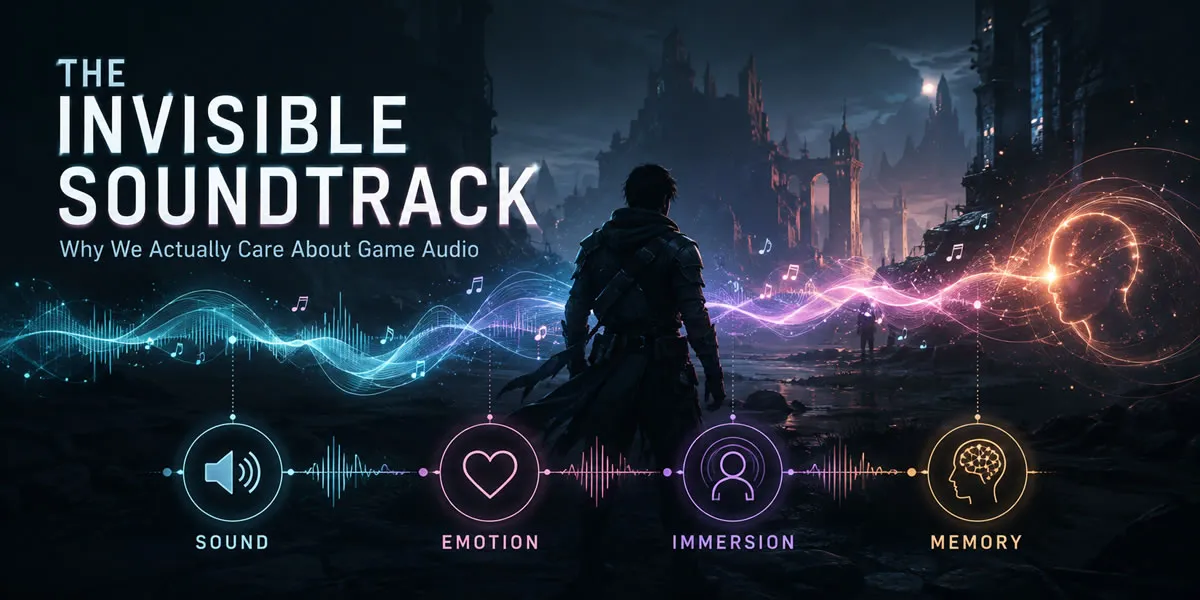
Music and games have been walking hand in hand since day one. Think about the old-school games we used to play when we were younger; there was not much that could be done back then. All they had was a couple of beeps in 8-bit sounds, maybe one looped melody at most. Well, to put it simply, they certainly did not make any symphonies by Beethoven, but they sure hit the mark.
Fast-forwarding into the present day, the world has become absolutely bloated. We now have the most gargantuan PC productions with development costs matching those of big-budget Hollywood films, all together with ultra-complex games for your mobile devices. The expectation for great sound is universal now, whether you are diving into a hundred-hour RPG or just checking out the latest slots games online. As the visuals grew up and matured, the soundtracks had to evolve right alongside them.
Setting the Mood: Way More Than Background Noise
Audio doesn’t just sit in the background anymore. In modern titles, it essentially drives the actual bus. The music reacts in real-time to what you’re doing on the screen.
This is exactly the kind of situation I mean: you are just casually walking through a forest in an expansive open-world PC game when suddenly, without you even noticing, you find yourself entering enemy territory. Immediately, the cellos start sounding threatening. Drums are pounding loudly all of a sudden. And, before you even know what’s happening or can see any danger on your screen, your heart rate is already shooting up.
That is psychology in pure action. Composers know exactly how to push our buttons and convey incredibly complex emotions without using a single word.
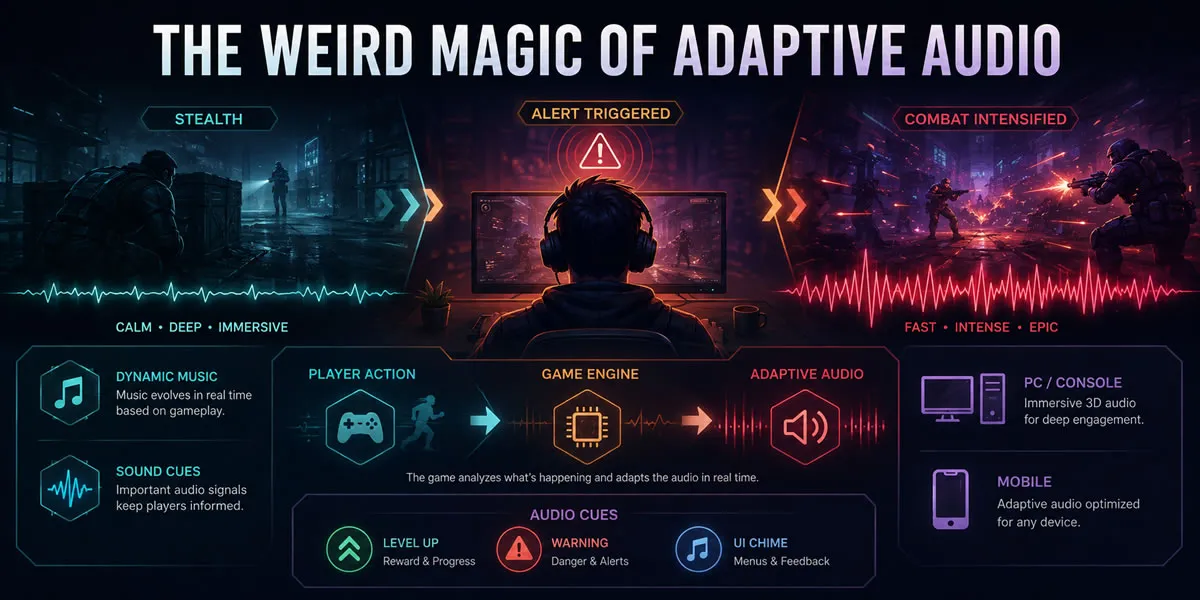
To give you an idea of how developers typically match their audio to the gameplay experience, here is a quick breakdown:
The Weird Magic of Adaptive Audio
It's probably wise to address the mechanics of how the music is achieved today because the technology behind the process is quite interesting.
In a classic movie production, the soundtrack is absolutely static. The musician knows when that very moment will come when the car will blow up onscreen. However, in a video game, you—the gamer—have absolute control. You may dash recklessly into the room or choose to linger in the corner organizing your digital possessions for the next twenty minutes. So, how do you keep the music in sync with you?
The solution lies in the concept known as adaptive audio. The modern gaming engines employ a highly sophisticated system of logic to automatically switch between several music tracks depending on your live inputs. Should you be silently sneaking into a heavily guarded base, the engine may produce an intense bass line. And should a guard suddenly spot you, the engine will automatically start playing frantic hi-hats and aggressive synth leads, seamlessly integrating it into the overall picture.
The Cross-Platform Mixing Headache
Creating all that audio stuff requires a lot of effort from the developer side. When they create some epic PC game, they actually assume that you have a nice gaming headset. Otherwise, at least, they expect that you own nice desktop speakers that can catch all that bass and instrumental layering.
In mobile games, the situation is quite different. Users usually play such games while traveling on public transportation, using cheap earbuds and the device's low-quality built-in speakers. The audio engineers have to carefully balance their music tracks so that they are still cool enough on these small devices, without being distorted at all.
The level of attention to all that stuff is absolutely insane, and it doesn’t matter if you are currently playing an action-packed MOBA on your mobile device or enjoying yourself in some city builder game on the way to work. Good audio quality is something that everybody expects nowadays.
Sound Cues: The Micro-Music We Ignore
Beyond the sweeping, dramatic orchestral tracks, there’s also the micro-level music.
- The Level-Up Riff: That short, completely triumphant burst of horns that plays when you gain a new ability.
- The Warning Tone: A sudden, anxiety-inducing drop in pitch letting you know your health is critically low.
- The UI Chime: A wildly satisfying, crisp click that sounds when you navigate menus.
These aren’t accidents. They are meticulously designed to lock you into the experience, turning simple, mundane actions into deeply satisfying feedback loops.
Rent-Free In Our Brains
One of the greatest aspects of video game soundtracks is that they completely rewire our nostalgic connections.
If you were to ask any of your friends to name their favorite video games from a decade ago, you can be sure they would remember the music. Music has this unique property that makes us connect it with memories we had. It connects to a certain character that you loved, the level you have struggled with and beat after countless attempts, or a location you have spent hours exploring in the digital world.
Play that music after a decade has passed, and you immediately jump into the past.
It is the graphics that show us the world in a digital form. Mechanics and code give us things to do within that world. But when it comes to music, it gives us feelings associated with whatever we are playing at the moment. Regardless of whether you are exploring a fascinating universe or casually tapping on a mobile screen, the music is doing the job for you. And sometimes, just the right music becomes the only thing separating an average game from a work of art.