Long before it conquered festival fields and streaming platforms, dubstep was an unassuming experiment being conducted in the few record shops and pirate radio stations of London. In the early 2000s, a handful of producers stripped away the flashy, rapid features of UK garage music and replaced them with slow, heavy, and airy beats. These producers were not trying to get into the spotlight. Instead, they tried to create something that felt like something else and captured a particular mood that was unique to their time.
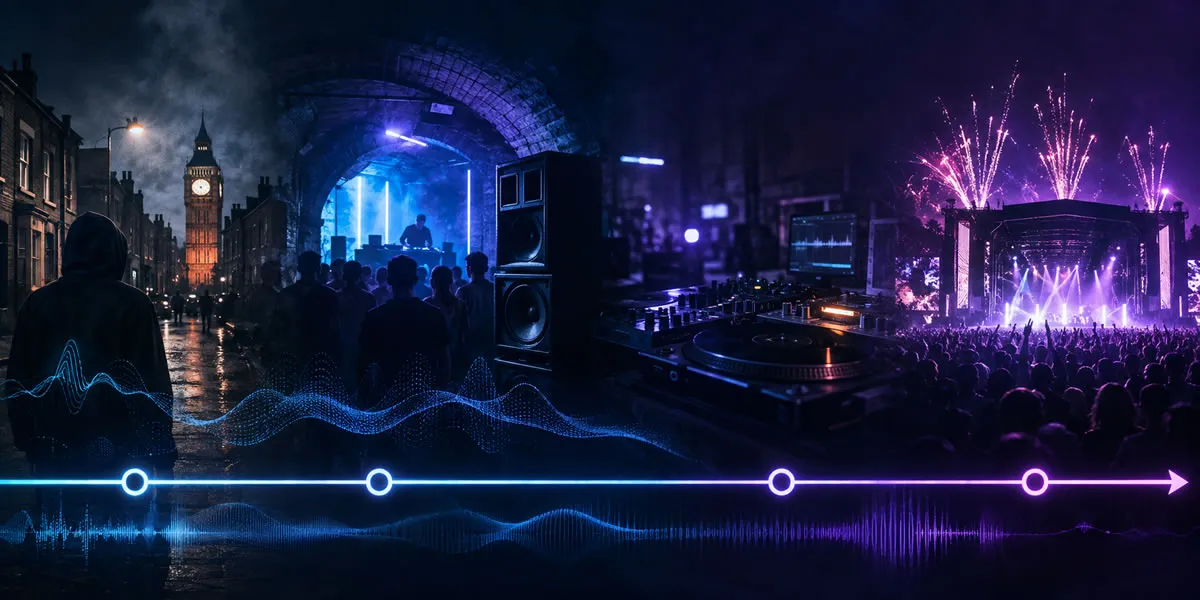
This particular mood emerged from the mix of influences. It got the low-frequency sub-bass and love of the sound space of reggae and dub music. The street energy of grime music provided additional roughness and edge to it. Drum and bass music brought club power.
Anyone curious about how this niche sound turned into a worldwide movement can dig into the full story, which traces the genre from its earliest club nights to the artists who carried it onto the global stage. What started as a local experiment eventually reshaped how millions of people experience electronic music.
What Makes This Style of Music Stand Out
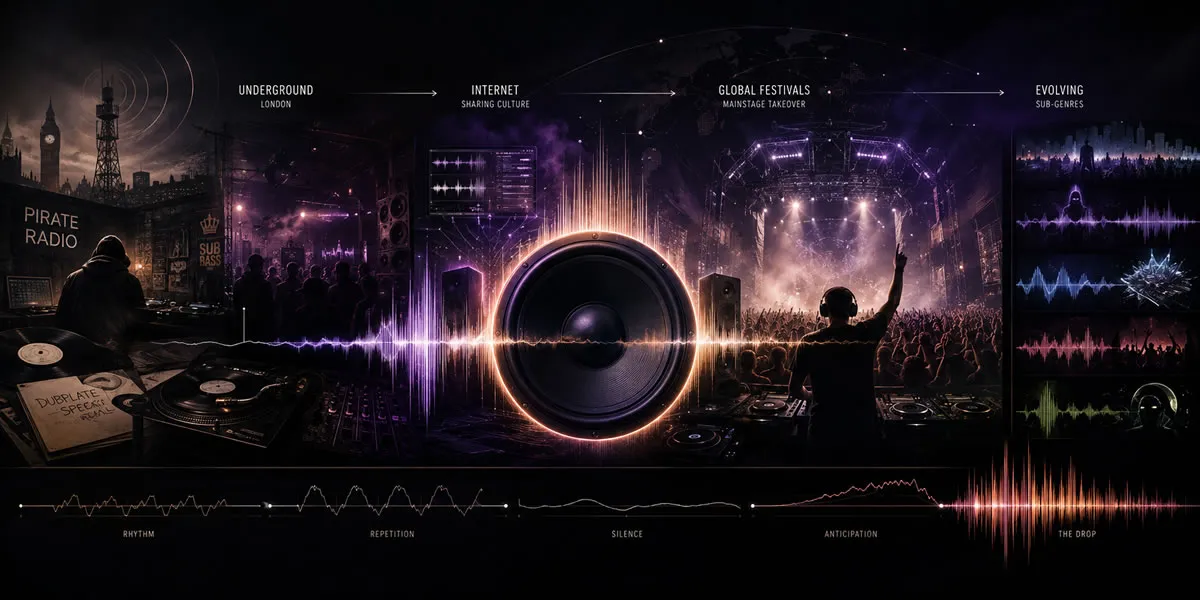
This genre deviates from the conventions of electronic music by relying on rhythm and repetition, using silence and anticipation instead of a relentless beat. A song might start slowly, almost timidly, only to build up to a drop, where the bass would drop and change the whole atmosphere of the track entirely.
And it is the bass that defines this genre the most. Filters and modulation produce a growling low end, which is felt through the speakers as much as heard. Rhythms accentuate the beats differently than a regular four-count, creating the effect of weightiness and unpredictability in the music.
The development of digital technology contributed greatly to the evolution of this genre. With more powerful studios at home, a producer had the possibility of designing a unique bass line and atmospheric layers that could not be done ten years ago. That made this genre become popular far outside of club venues.
From Pirate Radio to Global Stages
It has been mostly underground for many years. It spread via pirate radio transmissions, dubplates sent between DJ's and clubs, which also had as important a cultural scene as the sound itself. In order to become familiar with the genre, fans would have to look for the music themselves using informal channels and late-night radio transmissions, which regular listeners never experienced.
It all started to change thanks to the internet, which allowed music to be spread faster and easier. Thanks to blogs, forums and early music streaming sites, people around the world had access to the sound that used to be accessible only in several London postcodes. Non-British producers discovered this genre, mixed it with other sounds and took it to new levels. In several years, festival stages, which were occupied by house and trance performers before, started inviting artists of this genre.
The ascent of the genre to mainstream status in the late 2000's and early 2010's is the turning point. Festivals full of people found it entertaining with its grandiose build-ups and drop-downs. Moreover, this music has become a popular soundtrack of games and sports events, as well as part of pop production.
A Genre That Keeps Splitting and Reforming
As more producers took up the sound, it inevitably began to diversify into various sub-genres. While some producers chose to move towards heavier and more aggressive production for big festival crowds, others retained the original underground spirit of the genre, opting for spaciousness and subtlety rather than loudness. Thus, there appeared many variations of the same type of music ranging from melodious versions to hard bass-driven tunes designed for a less noisy environment.
The described process is quite common in the history of electronic music. As a rule, a genre does not remain static when it gets popular, and the case in question is no exception. Currently, new producers combine the sound in question with hip-hop and ambient textures as well as other forms of electronic music, thus allowing it to evolve rather than stick to any particular formula. It is noted in The Guardian that venues that played the first versions of the genre have become cult places where producers of an entire generation developed their skills in working with bass and rhythm.
Why It Still Matters
Despite predictions that its popularity would fade after the early 2010s boom, this style of music has proven remarkably durable. It still fills clubs and festival stages, and it remains a staple of streaming platforms and gaming culture. Long-running club nights that helped define the genre, such as the influential DMZ events documented by dmy.co, continue to shape how new artists approach bass music today.
Part of its staying power comes from how flexible the sound has proven to be. It can feel aggressive and confrontational or calm and atmospheric, depending on who is producing it. That range gives it room to keep attracting new listeners while still rewarding longtime fans who remember its underground origins.
For anyone new to this corner of electronic music, the best way in is simple. Start with a few foundational tracks, pay attention to how tension builds before a drop, and notice how much space producers leave in the mix. From there, branching into different sub-styles becomes much easier, and it quickly becomes clear why a sound born in a handful of South London clubs managed to reshape electronic music on a global scale.