Well, let us be honest here. The independent artist’s fantasy is to see his or her song featured on the front page of Spotify's Today’s Top Hits. It certainly sounds good. However, if you ask the people who have made careers out of the business to share their experience, you will get an entirely different story from them.

In reality, it is far less complicated and is performed backstage in the form of algorithmic playlisting. Think about the amount of songs that are now available on Spotify – more than 100 million songs, with new ones appearing every day. Since both the most recent songs and popular ones such as Blinding Lights exist within the same environment, it becomes impossible for the user to make an informed choice without a recommendation system.
The Algorithm Explained (Without the Tech Jargon)
Editorial playlists (created by Spotify employees) are sometimes mistaken for algorithmic playlists (created by computers). However, what you really want to have on your side is the computer since it works for you around the clock.
Here is a brief introduction to the key players and their respective functions:
The “Diet” of the Spotify Algorithm
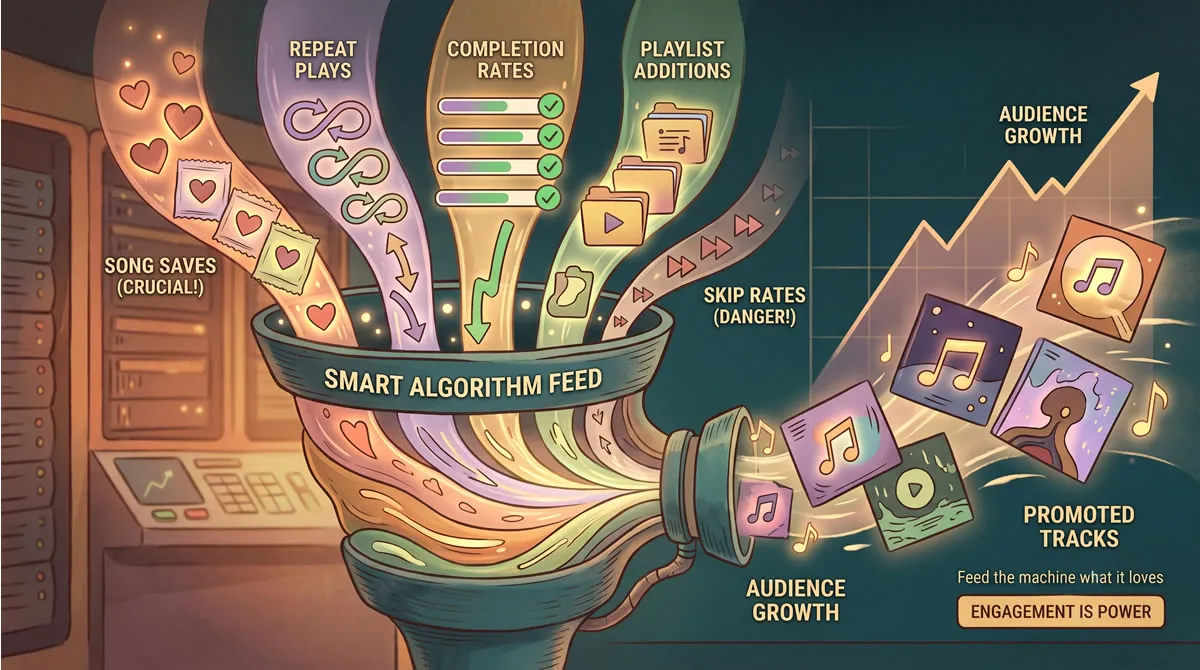
But then, what does the algorithm search for before it starts promoting your track? It isn’t only concerned with the number of plays. In fact, it is more interested in how people are consuming your content. This is the very reason why launching a strategically planned Spotify campaign is so important—the system measures engagement metrics instead of mindless views. The thing is that if the algorithm tests your song on fifty listeners and forty of them skip it in the first five seconds, it will consider your track unsuccessful.
Now, to activate the algorithm, these are the metrics you need to pay attention to:
- The “Save-to-Stream” Ratio: Are people just letting the song play in the background, or are they physically hitting that little plus button to save it? This is the ultimate vote of confidence.
- User Playlist Adds: When a regular listener adds your track to their personal “Gym Hype” or “Late Night Drive” playlist, Spotify’s system takes serious notes.
- Completion Rates: Do listeners actually make it to the end of the song?
- Skip Rates (The Silent Killer): If your track has a 45-second atmospheric intro before the beat drops, people will skip. High skip rates will kill your algorithmic momentum faster than anything else.
The First 48 Hours: Why You Can’t Wait
So many indie musicians put out a new track on a Friday, catch their breath, and then jump into promotion mode. This is completely backwards.
The Spotify recommendation system comes to quick conclusions about a song. You require a rush of traffic right when it gets dropped to let the algorithm know, “Hey, people are going crazy about this song – get it out there!”
Don’t wait until the release date and just throw up some generic “link in my bio” – do something different for the weeks before the release!
- Show the mess: Share a behind-the-scenes video of a frustrating studio session. People love authenticity.
- Tell the story: Do a short-form video breaking down the specific heartbreak or weird thought that inspired the lyrics.
- Community first: Run a targeted campaign specifically for your core fan base on Discord or Instagram broadcast channels before trying to reach strangers.
The Consistency Trap
And then there’s the harsh truth of sustaining that momentum. Just because you’ve dropped one track, it’s not okay to take six months off to “find yourself” and then hope Spotify will care when you return. The streaming service loves consistent activity.
Here’s some positive news, though – consistent content does not mean dropping a 10-track studio album every couple of months. All you have to do is make sure the lights are still on.
Dropping a live performance of your most recent track. Dropping an alternative version of it. Putting up a remix you made for your friend. Small releases like these sustain your account, keep you at your monthly listens and provide material for the algorithm to chew on while you’re working on other tracks.
The Takeaway
In the final analysis, the algorithmically generated playlists on Spotify have put the playing field at equal footing for all independent artists. While it is always thrilling to see major players in the industry break global streaming records with their massive new album releases, it no longer requires millions of dollars to be invested by a major record label in order to build a successful career. However, what it does require is a plan.
If you get people engaged, the machines will follow suit.